
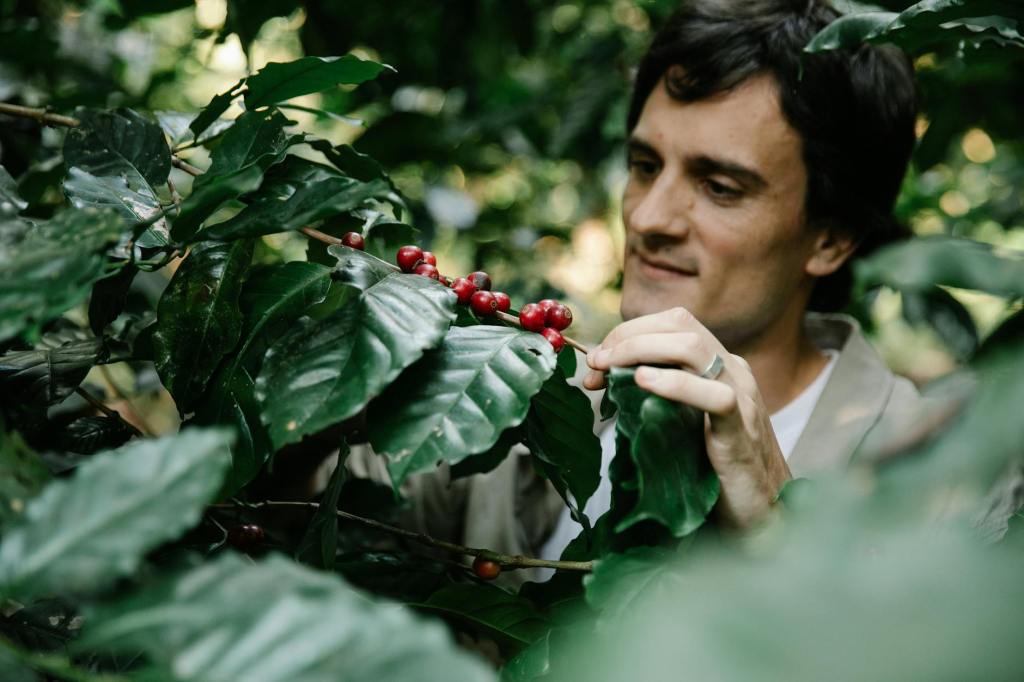
THE CAFFEINE CODE: A TIME CAPSULE
The world was drunk for a long time, and then it woke up. Before the 17th century, the West was a place of a slow, alcoholic fog. You didn’t drink the water because the water was death. It carried disease and microbes that would kill a man or a child. So you drank beer. You gave your children hard cider with breakfast. On the farms, there were beer breaks. People lived in a state of being buzzed or slumped from dawn until the sun went down. It is hard to be rational when you are drunk. It is hard to be linear in your thinking when the world is blurry.
Then came the coffee bean. It came from Ethiopia and moved through the hands of the Dutch and into the ports of Europe. It was a sober drink for a new kind of world. When caffeine arrived, the fog lifted. It was the right drug for the right time.
At Name and Occupation, we look at these shifts as the “extraordinary ordinary.” A simple bean changed the way men worked, how they thought, and how they built the modern world. This is the history of the shift from the cider jug to the espresso cup—a revolution that was brewed in a pot.
Uncovering the Coffee Revolution
THE SOBER ASCENT: COFFEE HOUSES AND THE AGE OF REASON
In the 17th century, coffee houses began to pop up across London like wildfire. These weren’t just places to sit; they were the “Penny Universities.” For the price of a cup, you could sit with the smartest men in the world.
There were houses dedicated to literature where poets and writers would congregate to find clarity. There was a coffee house dedicated to the selling of stock, a place of deep concentration and high stakes that eventually turned into the London Stock Exchange. Another was dedicated to science, where men like Isaac Newton would fuel their theories with the dark, bitter brew. Voltaire, the great figure of the Enlightenment, was said to have drunk 72 cups a day. It is a wonder his heart did not stop, but his mind never did.
Caffeine provided a clarity of thought that alcohol could never touch. It allowed for “head work”—the kind of double-entry bookkeeping and scientific calculation that required a man to be sharp and energetic. It was the sober, civil drink that fueled the Enlightenment and the Age of Reason.
BREAKING THE SUN: COFFEE AND THE INDUSTRIAL REVOLUTION
Before caffeine, work followed the sun. You started when the light came up and you stopped when the light went down. You were tied to the rhythms of the earth.
The Industrial Revolution changed that, and coffee was the fuel. Once men began working with machinery indoors, they needed a way to stay awake and stay focused. Caffeine, paired with the arrival of gaslight, allowed us to break our ties to the sun. You could now have a night shift. You could have an overnight shift. The pace of the worker could finally keep up with the pace of the machine.
By the 1950s, this had evolved into the established “coffee break.” Productivity naturally dips around two or three in the afternoon—the time of the traditional siesta. But in a world of capitalism and high-speed production, you don’t take a nap; you take a break to drink coffee. You maintain the productivity. You push through the slump. Caffeine made us super-productive, and it made the office culture possible.
THE EVOLUTIONARY STRATEGY: A WORLD MADE FOR PLANTS
There is a cleverness to the coffee plant that we rarely consider. We think we are using the plant, but the plant may be using us.
Caffeine is indispensable to the way we have organized our society. We have globe-spanning trade, long working hours, and a changing environment. We have created exactly the world the coffee and tea plants need in order to thrive. We have cleared forests to plant them and built massive industries to transport them. It is perhaps the most successful evolutionary strategy in history: make yourself necessary to the humans, and they will ensure you cover the earth.
We are addicted, yes, but is it a bad thing to be dependent on a plant that gives us focus, memory, and cellular health? In the American diet, coffee and tea are the single biggest sources of antioxidants. We eat so few plants that we get our health from the brew. It prevents disease, it fights dementia, and it keeps the mind linear.
THE ITALIAN ART: THE MECHANICS OF THE BREW
While the French and the Dutch moved the beans, the Italians perfected the machine. The espresso maker is a thing of simple, honest beauty.
In the NameAndOccupation archive, we look at the tools of the trade. The Italian Moka pot—often made of stainless steel or aluminum—is a staple of the culture. You put the water in the bottom, you add the grinds to the filter, and you put it over a medium-low fire. As the water boils, it is pushed through the grinds and up through a rod into the top chamber. It is strong, it is dark, and it is honest.
Angelo Moriondo of Turin received the patent for the first espresso machine in 1884. He saw the need for speed—coffee made “expressly” for the person waiting. Since then, the Italians have treated coffee not just as a drink, but as a 24-hour-a-day occupation.
THE FINAL RECORD: A NECESSARY ADDICTION
Coffee was an amazing aid to the rise of capitalism and the Age of Reason. It required us to think in focused, linear terms. It allowed us to conquer the night and master the machine.
Today, we live in a world that caffeine built. From the first espresso machine to the modern coffee break, it is the soundtrack to our productivity. At Name and Occupation, we archive these histories because they tell us who we are. We are a species that woke up, smelled the roast, and decided to build a world that never sleeps.
Whether you are drinking from a 20-ounce pot or a tiny gold-rimmed espresso cup, you are participating in a revolution that started centuries ago. It is a good way to live, and it is a true way to work.
 Name and Occupation