
From Sea to Sea to Sea
The Great White North
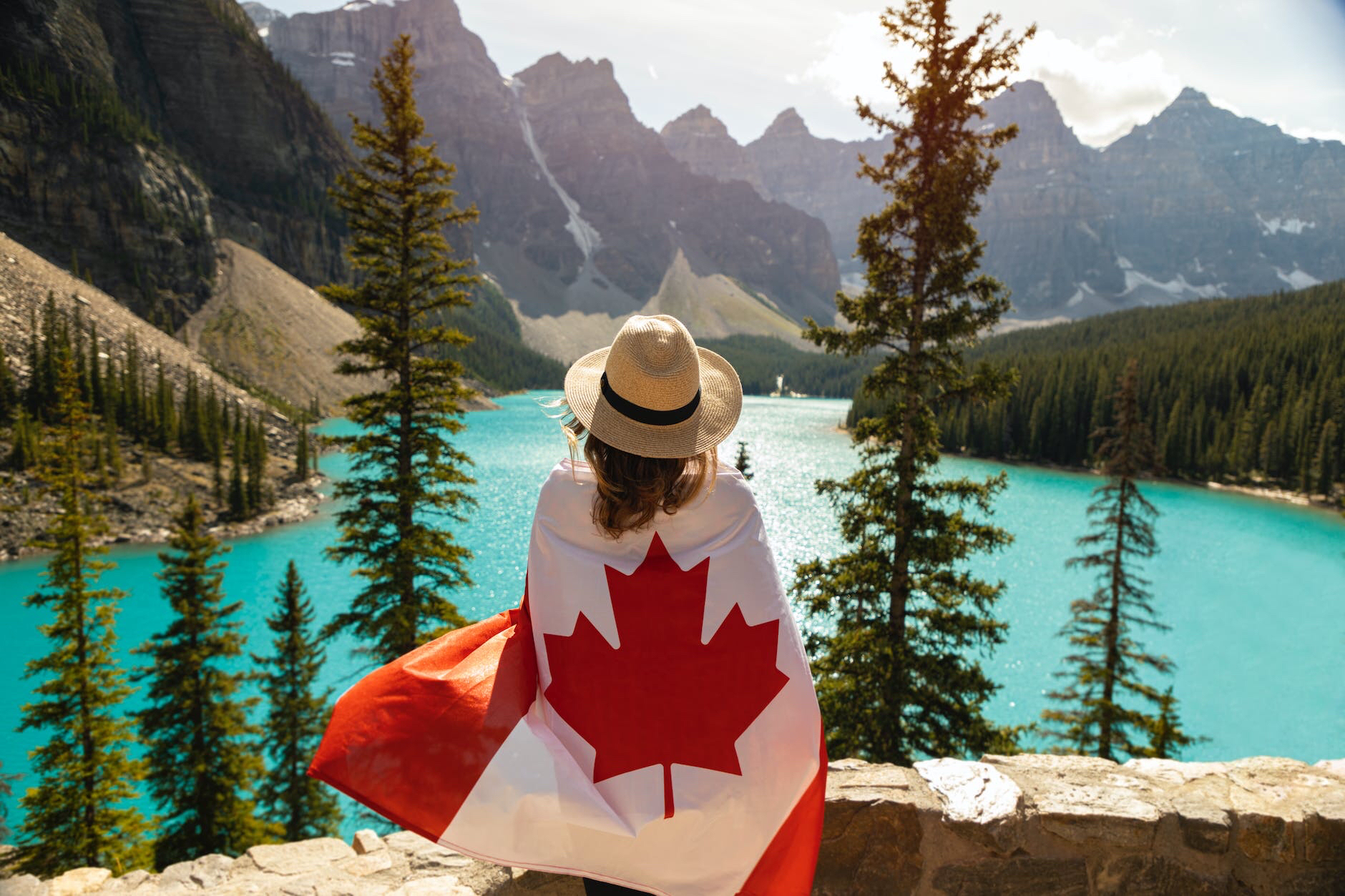
Canada claims 9.98 million square kilometres of territory, making it the second largest landmass on the planet. This geography dictates the national character through its massive scale and seasonal extremes. In the west, the jagged peaks of the Rockies create a vertical spine, while the interior Prairies offer an endless, flat horizon. The Canadian Shield covers nearly half the country, sheltering iconic wildlife like grizzly bears and moose. In the far north, the northern lights dance across the Arctic sky, anchoring a wilderness bordered by the Atlantic, Pacific, and Arctic oceans. This environment ensures that the land remains as central to the identity as the water, forcing a collective resilience against the elements.
Forging the Interior
The fur trade served as the first true economic engine of the north. Courageous voyageurs paddled birchbark canoes through uncharted river systems, establishing a network of outposts that eventually transformed into major urban hubs. This period defined the rugged, entrepreneurial spirit of the backcountry. Later, the construction of the Canadian Pacific Railway stitched the provinces together through sheer force of will. Workers carved a path through the solid granite of the Canadian Shield and the daunting mountain passes of the Rockies to unite the Atlantic and Pacific coasts. This iron link transformed a collection of isolated colonies into a single, cohesive nation, proving that the country could overcome the natural barriers of its own geography.
The Canadian lifestyle operates as a vertical mosaic rather than a melting pot, prioritizing distinct cultural identities within a unified national framework. This social structure encourages communities to maintain their unique heritage while participating in a shared civic life. Within this, hockey serves as the unofficial state religion and the primary social glue that links the fractured geography. It acts as the shared language of freezing small-town arenas and national Saturday night broadcasts.
Famous Canadians
The musical landscape carries a massive global footprint. Poetic voices like Neil Young, Gordon Lightfoot, and Joni Mitchell provided the emotional soundtrack for the 20th century, while Alanis Morissette’s raw songwriting defined a generation of alternative rock. Oscar Peterson defined jazz brilliance on a world stage, while the literary world exported the profound depth of Margaret Atwood and Leonard Cohen. Modern titans like Drake and The Weeknd continue to dominate global charts, proving that Canada exports its creative soul as effectively as its natural resources.
In Hollywood and sport, the Canadian presence remains ubiquitous. Wayne Gretzky redefined excellence on the ice, becoming a global symbol of athletic genius. Comedic legends like John Candy, Dan Aykroyd, Jim Carrey, and Catherine O’Hara, alongside absurdist pioneers like Tom Green, shaped the comedic landscape for decades. Michael J. Fox and Keanu Reeves became global symbols of charm and resilience, while Pamela Anderson emerged as a definitive pop culture icon. Visionary directors like Denis Villeneuve and James Cameron continue to redefine the cinematic experience, ensuring that Canadian storytelling reaches every corner of the globe.
Canadian Cuisine
Canadian food relies on heavy, survival-focused ingredients dictated by the climate and the harvest. Quebec produced poutine—a combination of fries, fresh cheese curds, and gravy—which transitioned from a rural snack into a national icon. Montreal provides its own distinct pillars, including salt-cured smoked meat and dense, honey-boiled bagels. In the west, the menu emphasizes wild game like bison and elk, while the Atlantic coast builds its identity around cold-water lobster, scallops, and cod.
The spring thaw signals the start of the maple syrup season, an industry where Canada produces 75 percent of the global supply. Sweet staples like Nanaimo bars, butter tarts, and BeaverTails offer the necessary caloric fuel to endure the northern winters. For more refined palates, the Niagara Peninsula and the Okanagan Valley utilize the natural freezing cycles to produce world-class ice wine. These regional foods reflect a society that understands how to extract warmth and flavor from a challenging environment.
Navigating the Wild
Crossing Canada requires a serious commitment to the distance between its hubs. The Icefields Parkway through the Alberta Rockies offers a spectacular drive through a corridor of ancient glaciers and turquoise lakes. For a slower perspective, Via Rail’s “The Canadian” offers a four-day journey from Toronto to Vancouver, revealing the true scale of the Prairies and the mountain ranges. This journey emphasizes the isolation that many Canadians experience daily, where the next town might be hours away.
On the eastern edge, Newfoundland provides a jagged, maritime atmosphere that feels entirely separate from the mainland. On the West Coast, the temperate rainforests of Tofino offer a misty, end-of-the-world environment. To understand the country, you must experience the contrast between the high-tech skyscrapers of Toronto and the 17th-century cobblestones of Old Quebec. Each region maintains its own frequency, linked only by the shared geography and the collective pride of surviving the north.
Hotels.com Canada: Save up to 25% on mobile exclusive offers!


Podcast
The Canada coverage on NAO runs across three dedicated city pages. Toronto covers the city’s soul, the MuchMusic golden era, BeaverTails, and TIFF. Montreal covers Jacques Cartier’s 1535 arrival, Schwartz’s Deli, poutine, Oscar Peterson, and Erik Nieminen’s studio. Ottawa covers Parliament Hill, the Rideau Canal, Byward Market, and The Bender secret festival — now in its 42nd year.
Conversations
David Gogo is a Canadian blues guitarist from Nanaimo, British Columbia. He has recorded over a dozen albums and toured internationally for three decades. Full story on his interview page.
Marc Cinanni is a Canadian musician and multi-instrumentalist. His interview covers the intersection of musical tradition and modern recording. Full story on his interview page.
Nathan Bishop MacDonald is a Cape Breton musician carrying the Gaelic and Celtic musical tradition forward. Full story on his interview page.
Erik Nieminen is a Finnish-Canadian painter based in Montreal. He works in oils and collaborates on AI and NFT projects. Full story on his interview page.
For more on Toronto, Montreal, and Ottawa — all covered in full on NAO.
Canada’s Capital Ottawa
Click Here for the Best Montreal Hotel Deals!


Episodes
Interviews
Vancouver – What You Need to Know Before You Go