
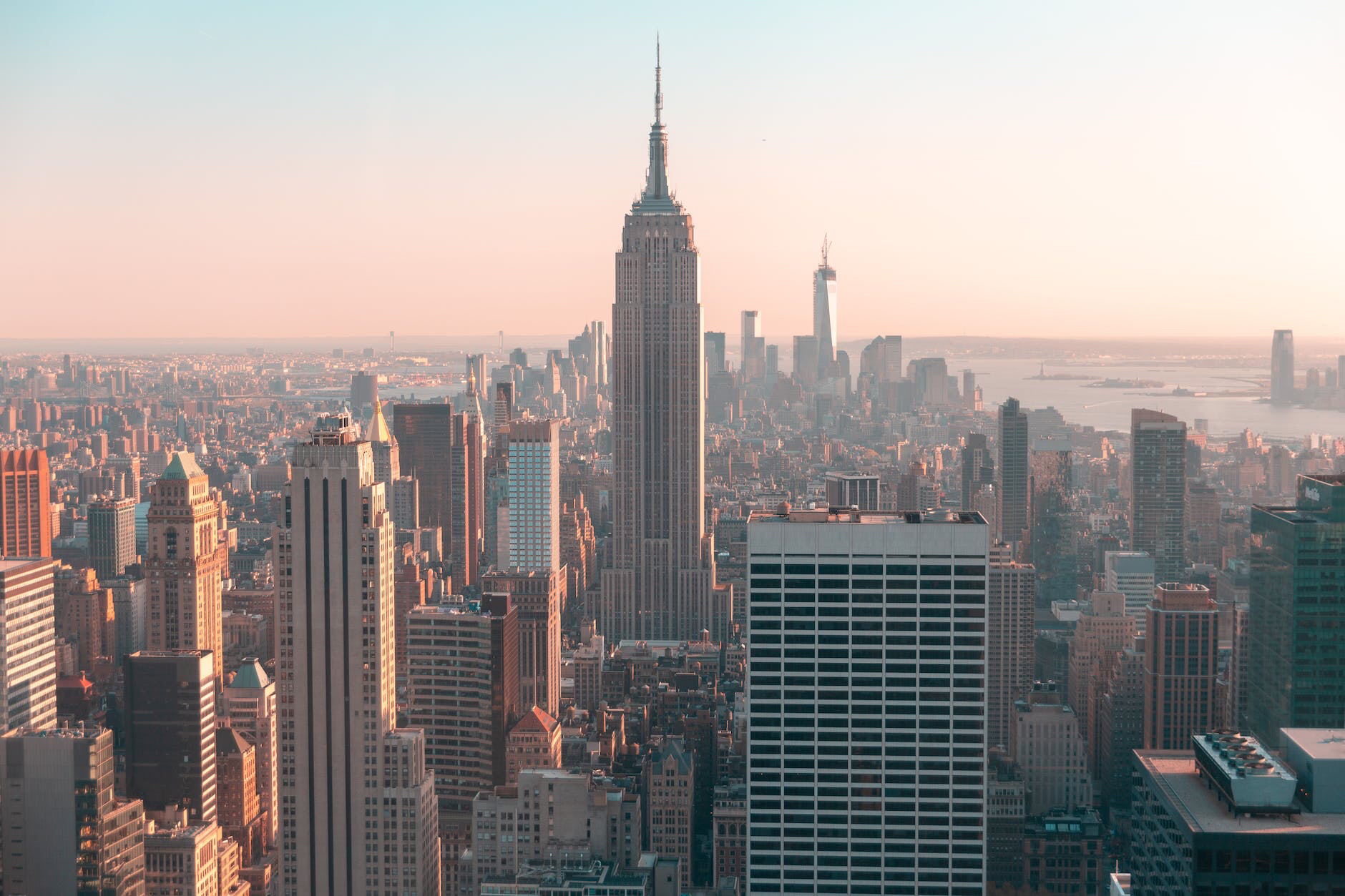
The City That Never Sleeps
New York City was built by people who had nothing and wanted everything. That is still the operating principle. The city draws ambitious, restless, creative people from every country on earth and runs on the energy they bring. It has been doing this for four hundred years. The scale has changed. The instinct hasn’t.
Start at street level. The steam rising from the subway grates. The smell of roasted nuts from the corner carts. The noise, the density, the pace — all of it arriving at once before you’ve had time to adjust. New York doesn’t ease you in. It assumes you can keep up.
The Dutch Origins
New York City began as Nieuw Amsterdam — a small Dutch trading post established by the Dutch West India Company on the southern tip of Manhattan in 1624. The settlement was commercial from the start. Trade, profit, efficiency — the Dutch brought their priorities with them and built a city around them.
Wall Street takes its name from the defensive wall the early Dutch settlers built along the northern edge of the settlement. The wall is long gone. The street it left behind became the financial centre of the modern world. That is a particular kind of legacy — a wooden defensive structure from the 1600s giving its name to global capitalism.
The Dutch influence runs deeper than the street names. The tolerance for diversity, the focus on commerce over ideology, the pragmatic approach to coexistence — these are Dutch traits that became New York traits. The city that emerged from Nieuw Amsterdam is cosmopolitan in the specific way that trading cities tend to be: it doesn’t care where you’re from as long as you’re useful and willing to work.
New York City: Find the best flights at Expedia.com
Episode
New York City: A Concrete Jungle of Dreams and Delis
Manhattan is the obvious starting point. The landmarks are famous for a reason — the Brooklyn Bridge, Times Square, Central Park, the High Line, the Statue of Liberty visible from Battery Park. These are worth seeing, not because they are tourist attractions, but because they are genuinely impressive at scale. The Brooklyn Bridge in particular is better on foot than in any photograph.
Greenwich Village is where the bohemian history of New York is most legible. Café Wha? on MacDougal Street is one of the landmarks of that history — a basement venue where Bob Dylan performed in the 1960s, where Jimi Hendrix played, where the folk and rock scenes of the early 1960s found an audience. The decor is specific and the live music still runs nightly. It is the kind of place that earns its reputation rather than trading on it.
The museums are world class. The Met, MoMA, the Guggenheim, the Whitney, the Brooklyn Museum — more serious art per square mile than almost anywhere on earth. Plan around them rather than trying to do all of them in one trip. One museum done properly is worth four done quickly.
For food — New York has over 22,000 restaurants. Eating three meals a day, it would take more than seven years to try them all. The practical advice is straightforward: avoid the franchises, avoid the tourist traps around Times Square, and go where locals actually eat. The city rewards this approach. The authentic places — the old school delis, the neighbourhood Italian joints, the dim sum spots in Flushing, the Caribbean food in Crown Heights — are consistently better and consistently cheaper than anything near a major landmark.
Interview
New York City: An Artist’s Life in Brooklyn
Daniel D’Ottavio has been based in East Williamsburg and Bushwick for years. His account of what makes New York work for artists is one of the clearest explanations of the city’s particular appeal.
New York values life experience over material possession in a way that most cities don’t. People respect your stories and your character more than your car or your bank account. That comes directly from the city’s immigrant history — the Ellis Island generations who built this place through work and determination, without the safety net of inherited wealth or social position. Everyone knows that story. It shapes the culture in ways that are still visible.
The artist migration tells you something about how the city evolves. In the 1980s, creatives moved to Soho and the East Village. Rising costs pushed them to Williamsburg in the 1990s. Gentrification followed, as it always does, and the next wave moved further out — to the industrial zones of Bushwick and East Williamsburg, where warehouse buildings and cement factories provided cheap space and a particular kind of gritty character that serious artists tend to find useful. That process continues. The frontier of affordable creative space moves further from Manhattan with each decade.
What doesn’t change is the energy. Furthermore, New York generates a particular kind of creative intensity that is difficult to replicate elsewhere — the density of ambition, the proximity to other serious people doing serious work, the sense that the city itself is watching and judging and pushing you to be better. For some people that is energising. For others it is exhausting. Most artists find it both simultaneously.
Full Interview
NYC Photographer Daniel D’Ottavio
Feature Story
Street Art
New York City is where graffiti became an art form. The subway cars of the 1970s and 1980s were the canvas — illegal, contested, and genuinely remarkable in the scale and ambition of what was being made. Writers like Taki 183 and later the full culture that emerged around them turned the infrastructure of the city into a gallery that nobody had commissioned and nobody could stop.
That tradition continues in the streets of Brooklyn and the Bronx, in the murals that cover entire building facades in Bushwick, in the work that appears overnight and disappears just as fast. The full story is covered in the NAO New York City Street Art episode — worth watching alongside this guide.
Recipe
How to make Manhattan Clam Chowder
In Francesco’s Kitchen, the New York episode produced a recipe worth keeping. Manhattan Clam Chowder — tomato-based, hearty, dairy-free — is the less famous cousin of New England Clam Chowder. It is also, in the right conditions, the better one.
Francesco’s version uses seasonal vegetables and a technique that lightens the base without losing the depth. The dish traces its origins back further than New York — through a 1934 cookbook by Virginia Elliott and Robert Jones, and before that through culinary lines that run back to ancient Greece via the New World. In practice it is a simple, satisfying soup that works particularly well in autumn. The recipe is in the episode.
More Interviews
The NYC page connects to two key NAO interviews. Daniel D’Ottavio — fashion photographer, Brooklyn resident, the man who shot Willem Dafoe and Michael Shannon and documented rugby in Queens on medium-format film. And the Anonymous Reality Documentary — Erik Nieminen’s decade in the art world, which passes through New York as one of its key chapters.
Both are worth your time. Together they give you a picture of what artistic life in New York actually looks like — not the mythology, but the daily reality of building a creative career in the most competitive city on earth.
For more on the USA and Boston — both covered in full on NAO.


Hotels.com: Save up to 25% on mobile exclusive offers!
Related