
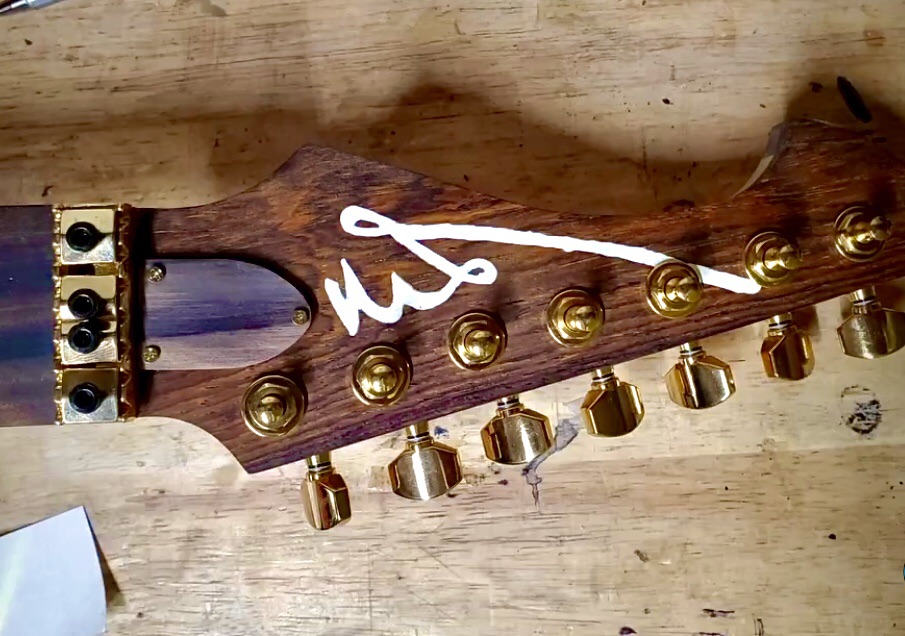
Designer Mike Thompson
Building a guitar is engineering. But finishing a guitar requires soul. At MonkeyHouse Guitars in Kansas, the process isn’t dictated by a factory clock or corporate bottom line. Instead, it’s driven by the specific, tactile demands of the wood and the player. In an era of mass-produced instruments, the work coming out of this workshop proves that the best tools are made with the most patience.
The Kansas Workshop: Where Time Slows Down
Kansas is characterized by vast, open stillness. That environment reflects in the MonkeyHouse philosophy. Lutherie—the art of making stringed instruments—is a game of millimeters. A slight over-sanding of a neck profile or miscalculation in bridge placement can ruin months of labor. Here, the silence of the plains provides the perfect backdrop for the deep focus required to turn a raw slab of mahogany or maple into a resonating machine.
The workshop is a sensory experience. The air carries the scent of nitrocellulose lacquer and freshly cut spruce. Every tool has its place—specialized planes for thinning guitar tops, digital calipers for checking fret heights. This isn’t just a job. It’s a meticulous pursuit of the perfect vibration.
The Anatomy of an Obsession
What sets a custom build apart from a shelf-bought model is intentionality. At MonkeyHouse, the selection of tone woods is the foundation of every project. First, a builder looks for “tap tone”—the natural resonance of a piece of wood when struck.
But the craft goes beyond just wood. The electronics. The hardware. The specific feel of the neck. All tailored to the individual musician. The goal: create an instrument that disappears when you play it, becoming an extension of the artist’s hands. This level of customization is why professional musicians seek out small-batch builders. They’re looking for character and response that a CNC machine cannot replicate.
Interview
Name: Mike Thompson Occupation: Guitars
Location: Kansas, United States
Monkeyhouse Guitars
The journey of a MonkeyHouse guitar begins with the blank. Then the wood is carved, shaped, and sanded through increasingly fine grits. The builder must account for the tension that six steel strings will eventually exert on the neck and body. The structural integrity of internal bracing is just as important as the external finish.
The finishing process matters. Applying a thin, breathable finish is essential for allowing the wood to vibrate freely. Many modern guitars are suffocated by thick poly coatings that kill the tone. In contrast, MonkeyHouse prioritizes finishes that age gracefully, allowing the instrument to open up and sound better the more it’s played.
The final setup—the dress and polish of the frets—determines playability. The difference between a guitar that fights you and one that inspires you.
The Legacy of the Handmade
In the current music industry, there’s a growing counter-movement against the disposable culture of cheap gear. People want items that last a lifetime and carry a story. Owning a MonkeyHouse guitar is about more than having an instrument. It’s about participating in a lineage of craftsmanship.
Technology changes how we record and share music. Still, the fundamental physics of a vibrating string over a wooden box remains the same. The builders in Kansas are keeping that tradition alive, one fret at a time. They prove that in a world moving at breakneck speed, there’s still value in things made slowly, by hand, in the heart of the country.
Full 2025 interview: Mike Thompson