
Manager, promoter and musician
My career the music business
After being booted out of High Storrs Grammar in 1973 for laziness, Paul joined the ground-breaking Youth Arts workshop Meatwhistle, where he took up guitar duties with the proto-punk anti-group Musical Vomit. The lineup was raw, ambitious, and deliberately difficult—exactly what punk would become.
Musical Vomit featured 16-year-olds Ian Reddington (later of “EastEnders” and “Coronation Street”) on percussion and masterful posing, and Glenn Gregory on three-string bass guitar—a testament to their financial constraints. Despite missing one string, Glenn’s approach would eventually lead him to Heaven 17 and backing vocals for Tina Turner.
Musical Vomit
Musical Vomit didn’t last. The band split in 1974 after their sixth gig at the Bath Arts Festival, a performance that ended abruptly when the group was caned off stage by discontented hippies shouting “Play some music, man!” This reaction proved they were doing something right.
Among the audience that night was young Poly Styrene of X-Ray Specs, who later said they were “the first punk band I ever saw.” Not a bad legacy for a band that lasted six gigs.
One splinter group from Musical Vomit was called ‘Underpants’—Martyn Ware on stylophone, Paul on guitar, performing his first composition, “Wimpy Bar Magnet.” This was Paul’s development as a songwriter. A decade later, Martyn produced Tina Turner’s comeback hit “Let’s Stay Together,” the multi-platinum single that relaunched her career.
Paul and Martyn are still close friends. Some things survive everything else.

Magazine
In 1976, Paul founded a punk fanzine magazine—one of the first outside London. He collaborated with Adi Newton, former Meatwhistle member, later of Clock DVA. The magazine landed distribution through Rough Trade. It reached Japan and the USA. Issue 4 ran the first ever interview with Cabaret Voltaire.
Pop Punk Trio
Paul formed the new wave agit pop punk trio 2.3. They released a double A-side single “Where to Now?/All Time Low” on indie label Fast Product. Paul had an early connection with the Human League—he was behind the mixing desk at the band’s first gig at Sheffield Art College. He delivered a cassette demo of early Human League tracks to label boss Bob Last, who signed them. Three months later, ‘Being Boiled/Circus of Death’ dropped, solidifying the group’s place in music history.
Managing
The journey of 2.3 came to a close in December 1979. Paul pursued a degree in Spanish at Sheffield University while managing the local soul outfit Floy Joy. He waited nine hours outside Geffen Records in Manhattan. The target: producer Don Was. It worked. Was would later become an Oscars musical director, and Floy Joy got the recognition they deserved.
After graduating, Paul took on the role of co-ordinator for Red Wedge, a music campaign supporting the Labour Party, spearheaded by Paul Weller and Billy Bragg. He moved on to manage Sheffield legends ABC during their comeback—the hit single “When Smokey Sings” and their fourth album, Alphabet City. His management career was cut short during an unexpected all-night drinking session with a Dutch karate instructor, leading him to reassess his path.
Interview
London Manager, Promoter, Musician
Today, Paul works as the Business Development Manager for the British Ecological Society, the world’s oldest community of academic ecologists. He lives in Camden. Two adult kids. Still performing. Still collecting stories.
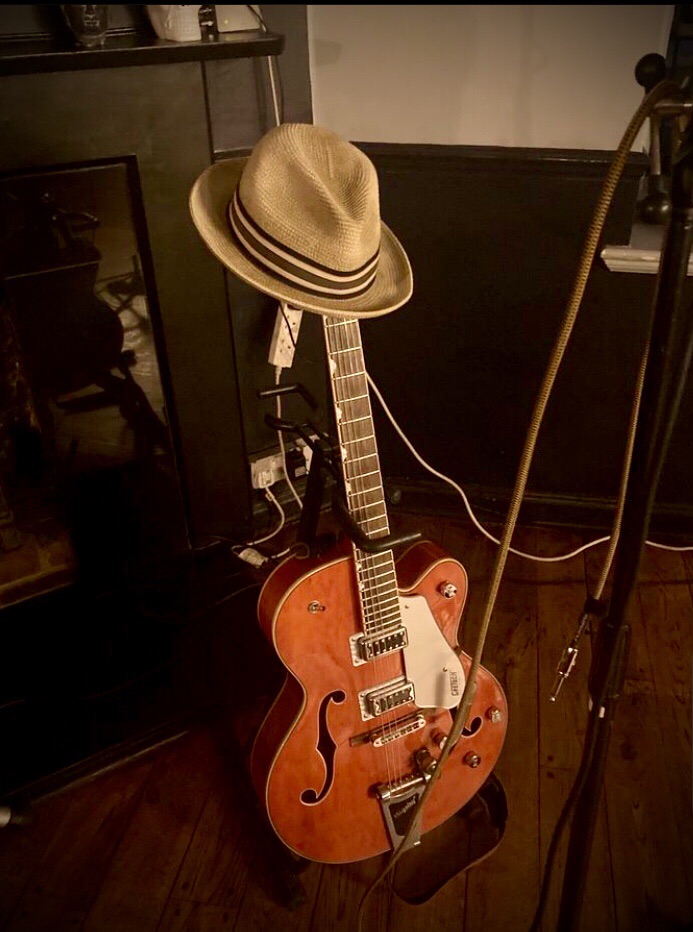
Paul remains active in the London open mic scene. His most well-received song is “You Won’t Miss Me When I’m Gone,” a composition reflecting on mortality. It resonates with audiences. He’s still playing. Still writing. Still showing up at open mics in Camden with something worth saying.
Instagram
https://instagram.com/bowersubmerged
Music
Miss me when I’m gone – PAUL BOWER


Side Note
2.3 New wave Album
3.2 All time Low (1978) YouTube