
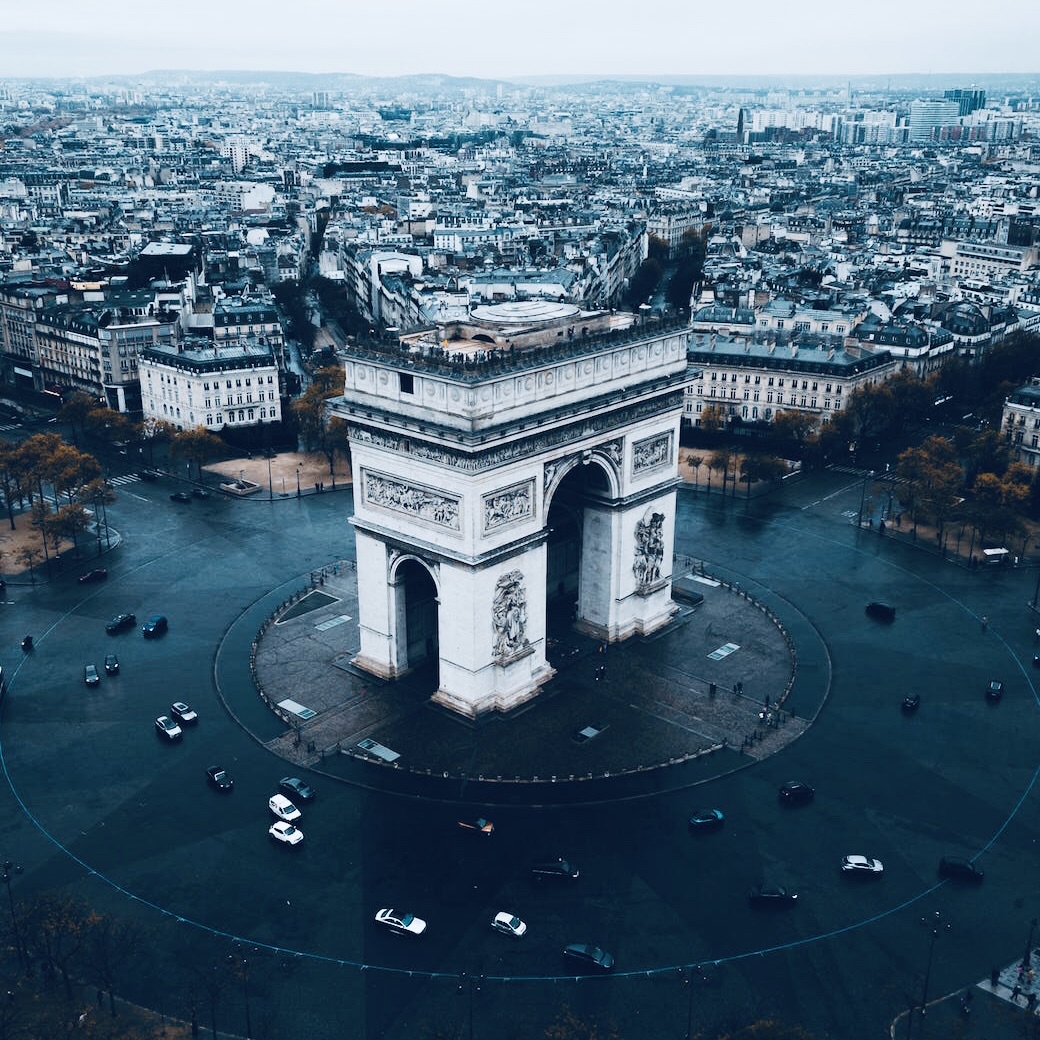
The City of Love
Paris Uncovered: Travel Hacks and Gems
Paris rewards preparation and punishes impatience. The queues are real. Travelers who show up without a plan spend most of their time staring at the backs of heads instead of the art they came to see. A little homework reveals a different city—one that feels like discovery rather than a tourist trap.
This isn’t about avoiding crowds entirely. That’s impossible in Paris. Instead, this is about working around them intelligently enough that you actually get to experience what you came for.
The Landmarks
The landmarks require strategy. Start with the Louvre. Understand its scale—this isn’t a museum you see in an afternoon. First, book your time slot three weeks ahead. Phone codes let you skip the main queue entirely, saving an hour of standing in the courtyard watching other people inch forward.
The Mona Lisa is smaller than expected and surrounded by a sea of smartphones. Everyone photographs it. Almost nobody looks at it. However, you should go anyway, check the box, then move to where the real time should be spent. The Egyptian antiquities span three millennia. Similarly, the Greek and Roman collections hold sculptures that defined Western art for two thousand years. These galleries are quieter. The ceilings are higher. In fact, the work demands attention in a way that actually rewards it.
The Winged Victory of Samothrace sits at the top of the Daru staircase. It’s a 2,200-year-old marble sculpture of Nike, the Greek goddess of victory, and it’s more impressive than anything you’ll see on a screen. Stand there. Look at it. Above all, understand why empires built museums to hold things like this.
Next, the Eiffel Tower is best at dusk. The light hitting the iron creates a golden hue no postcard captures accurately. Crowds thin slightly as dinner hour approaches. From the summit, Baron Haussmann’s 19th-century urban planning becomes visible—the radial grid you can’t see from ground level. The boulevards cut through the city in straight lines radiating from central points. It was controversial when built. Now, it defines Paris.
Versailles needs a half-day minimum. For instance, go on a weekday to avoid the weekend rush. The Hall of Mirrors, the 40-metre chapel, and the gardens are each worth the trip alone. Louis XIV built Versailles to prove France was the center of the civilized world. Whether or not that was true, the palace makes the argument convincingly.
Getting Around
Rent a bike or scooter through a city app. Paris has dedicated lanes throughout, making it faster than the metro for short distances and considerably more enjoyable. As a result, you see the architecture of Le Marais or the facades of Rue de Rivoli without being trapped in an underground tunnel.
The bike system works well. Drop-off points are everywhere. So, you never have to return to where you started. Helmet optional, though the Parisian approach to traffic laws takes getting used to. Red lights are treated as suggestions. Pedestrians step into bike lanes without looking. Ultimately, you adapt or you don’t ride.
The metro works when bikes don’t. It’s efficient, comprehensive, and runs until after midnight on weekends. A carnet of ten tickets costs less than buying individually. Keep one in your pocket. You’ll use it.
Food
The food conversation in Paris starts and ends at Café Select in Montparnasse. Hemingway immortalized it in The Sun Also Rises. Unlike most historic spots that coast on reputation, Café Select maintains standards. The waitstaff pay attention. The drinks are made correctly. Indeed, the food justifies ordering it. The atmosphere delivers what the legend promised.
Paris has 130 Michelin-starred restaurants. But, you don’t need them. The neighborhood bistros serve what Parisians actually eat—duck confit, steak frites, escargot prepared the way it’s been prepared for a hundred years. Find one near your hotel. Go there twice. Most importantly, order what the table next to you is eating.
Bread matters in Paris. The baguette from the corner boulangerie at 7 a.m. is different from the baguette at noon. Fresh is the point. The butter is cultured and salted. Indeed, the combination is why people write poems about French food.
Paris: From Eiffel Tower to Louvre
This was the core of Daze and Francesco’s Paris trip. The famous landmarks, yes—but also the nuances that make Paris more than a postcard. We moved from the Eiffel Tower to the Louvre to Versailles, finding the hacks that turn a standard trip into something deeper. The phone code for the Louvre queue. The right time to hit the Eiffel Tower. The weekday strategy for Versailles.
These details matter. They’re the difference between spending four days in lines or four days actually seeing Paris.
Bookmark this page for links to more France content.
Subscribe to the Youtube Channel.
The Roaring 20s Paris | The Lost Generation
To understand Paris, look back to the 1920s. The Lost Generation. A creative boom fueled by specific circumstances. While the United States enforced Prohibition, Paris remained open. Liberal thought. Available spirits. Cheap rent. A franc that favored Americans with dollars.
This led to mass migration—artists, writers, thinkers flooding Montmartre and Montparnasse. Hemingway arrived in 1921. Fitzgerald came in 1924. Gertrude Stein hosted them in her salon on Rue de Fleurus. They drank., wrote. They created the literature that defined American modernism while sitting in French cafés.
The influence extended beyond literature. Fashion evolved—the flapper style challenged Victorian norms. Art movements like Surrealism and Cubism emerged from Montmartre studios. Jazz filled the clubs of Pigalle. Josephine Baker performed at the Folies Bergère. The city became the center of Western creativity not because it was trying to be, but because it allowed things to happen that couldn’t happen elsewhere.
This era shaped modern culture. The books written in Paris cafés became the American canon. The art movements became the foundation of contemporary art. The liberation embodied by flappers and jazz clubs became the template for counterculture movements that followed.
The sun also rises at Le Select in Montparnasse
On our four-day trip, nothing topped the evening at Café Select. I’ve been obsessed with Fitzgerald and Hemingway since I was 17. Reading The Sun Also Rises. A Moveable Feast. The Great Gatsby. These books shaped how I understood writing and Paris. Stepping into this café felt like entering a time capsule.
We hopped off the bus from the Eiffel Tower, arriving 20 minutes early for our 7 p.m. reservation. I was sweating with excitement—shirt drenched from August humidity and the anticipation of being in a place that had lived in my head for years.
Our waiter Mark was kind. He loved mixing drinks behind the counter at the end of the day. Experimenting with concoctions. Sharing the bar’s history. Hemingway used to step behind the bar himself, Mark said. Mix his own drinks. Create new ones. The space has a retro vibe. Well-lit. Inviting. Untouched by the modernization that claimed so many other spots.
The food was excellent. Every dish well-made. The risotto creamy. The lamb tender. The Greek salad fresh—surprising to order in Paris, but the Select doesn’t limit itself. The girls still call it the best meal of the trip, and they weren’t exaggerating for effect.
Hemingway Sour
The menu at Café Select lists the Hemingway Sour: fresh-squeezed lemon juice, Drambuie, bourbon. Simple. Sharp. The kind of drink Hemingway would approve of—no unnecessary complexity, just quality ingredients mixed correctly.
We sat on the terrace outside. Evening sky. August light. The soft glow of setting sun hitting Montparnasse streets the way it’s hit them for a century. Good food, drinks and good company. What life is about, whether you’re in Paris or anywhere else.
I posted a photo on Instagram. Tagged them. They reshared it on their page—a small thrill that completed the circle. Four days in Paris wrapped up in one evening at a café where American literature was born.
Paris works when you stop treating it like a museum and start treating it like a city. The landmarks matter. The history matters. But so does the baguette at 7 a.m. and the café where Hemingway mixed drinks and the realization that the city doesn’t perform for you—it just exists, confidently, and invites you to figure it out.


Related
Hotels.com: Save up to 25% on mobile exclusive offers!