
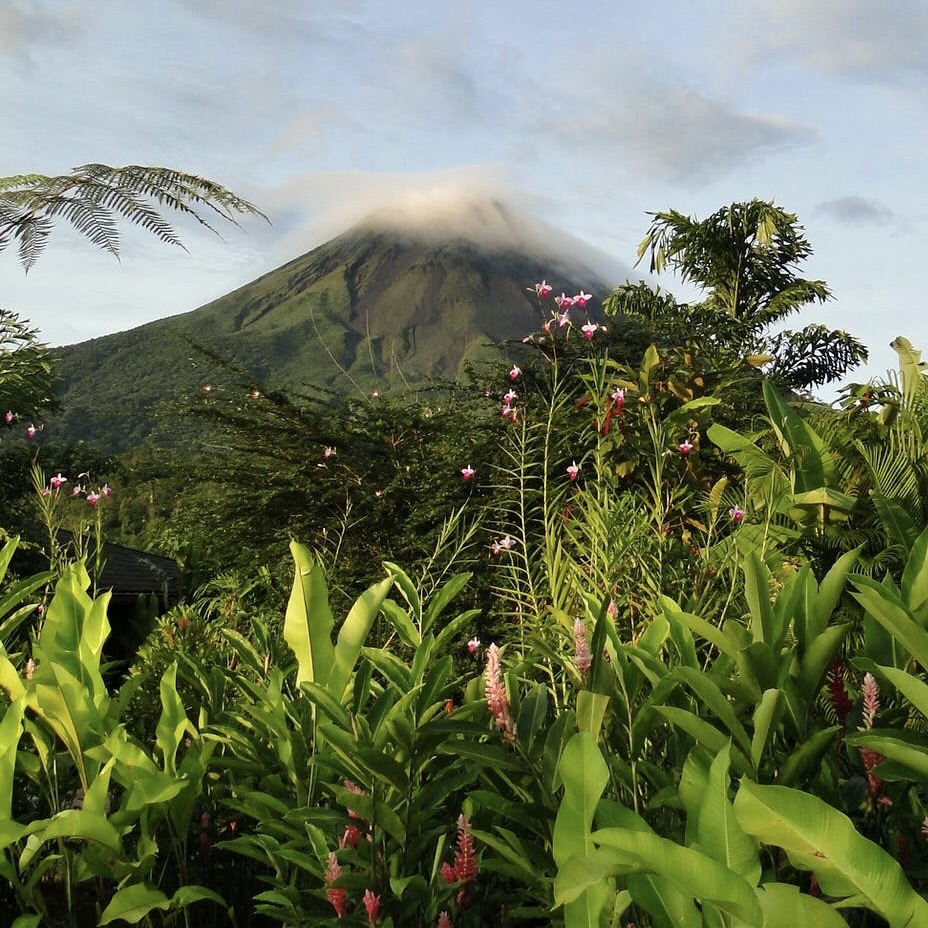
The Switzerland of Central America
Costa Rica abolished its military in 1948. That decision changed everything.
The money meant for defense went into education. Healthcare. Infrastructure. Green energy. The result: a Central American country running almost entirely on renewable energy, ranking among the happiest populations on Earth, with a national philosophy—pura vida—that actually means something.
We drove from the Central Valley to the Pacific coast. Cloud forests to volcanic regions. Eco-lodges in Monteverde to coastal sanctuaries in Guanacaste. The roads were well-maintained. The people relaxed. The landscape protected as national priority, not political talking point.
Pura Vida
Pura vida isn’t marketing. It’s the actual greeting. The national mindset. Pure life. Simple life. Good life. The phrase shows up everywhere because the culture actually supports it.
Free education. Universal healthcare. No military spending bleeding the budget. A social safety net that functions. Costa Ricans focus on community and nature because the government built infrastructure that allows them to.
The Green Economy
Costa Rica leads the world in sustainability. Not aspirationally. Functionally. The country runs on renewable energy—hydro, wind, geothermal. The commitment to environmental stewardship isn’t ideological. It’s economic. Protecting biodiversity attracts eco-tourism. Eco-tourism funds conservation. Conservation protects biodiversity. The cycle works.
The locals we met spoke about their land with pride. Not performative pride—actual ownership of the idea that protecting the environment matters. They see it as civic responsibility, not burden.
The Result
A society that feels cohesive. Forward-thinking without Silicon Valley smugness. Entrepreneurial without American hustle culture. Laid-back without laziness.
No military conflict. No extreme social disparity. A population that focuses on what matters: community, nature, well-being. Not perfect—nowhere is—but functional in ways most countries claim to want but never achieve.
The physical beauty helps. Cloud forests. Volcanoes. Pacific coastline. Spider monkeys. Waterfalls. Sunrises in Montezuma. But the beauty works because the system supporting it works.
Costa Rica chose happiness as measurable national priority. Then built policy around that choice. Seventy-five years later, the data supports the experiment.
Produced by Name and Occupation
All images by André Quesnel
Articles
World Economic Forum — Why Costa Rica is one of the world’s happiest countries
Wikipedia — Costa Rica facts
La Cruz Area
Santa Rosa National Park · Rincón de la Vieja · Volcano · Río Colorado · Waterfalls · Puerto Soley · Playa Rajada · Punta Manzanillo · La Cruz Lookout · Spider Monkeys · Salinas Bay
Montezuma
Beach Town · Sunrise · Jungle Alarm
San Jose Area
Cloud Forest Birds · Hummingbirds
Articles
World Economic Forum — Why Costa Rica is one of the world’s happiest countries


