
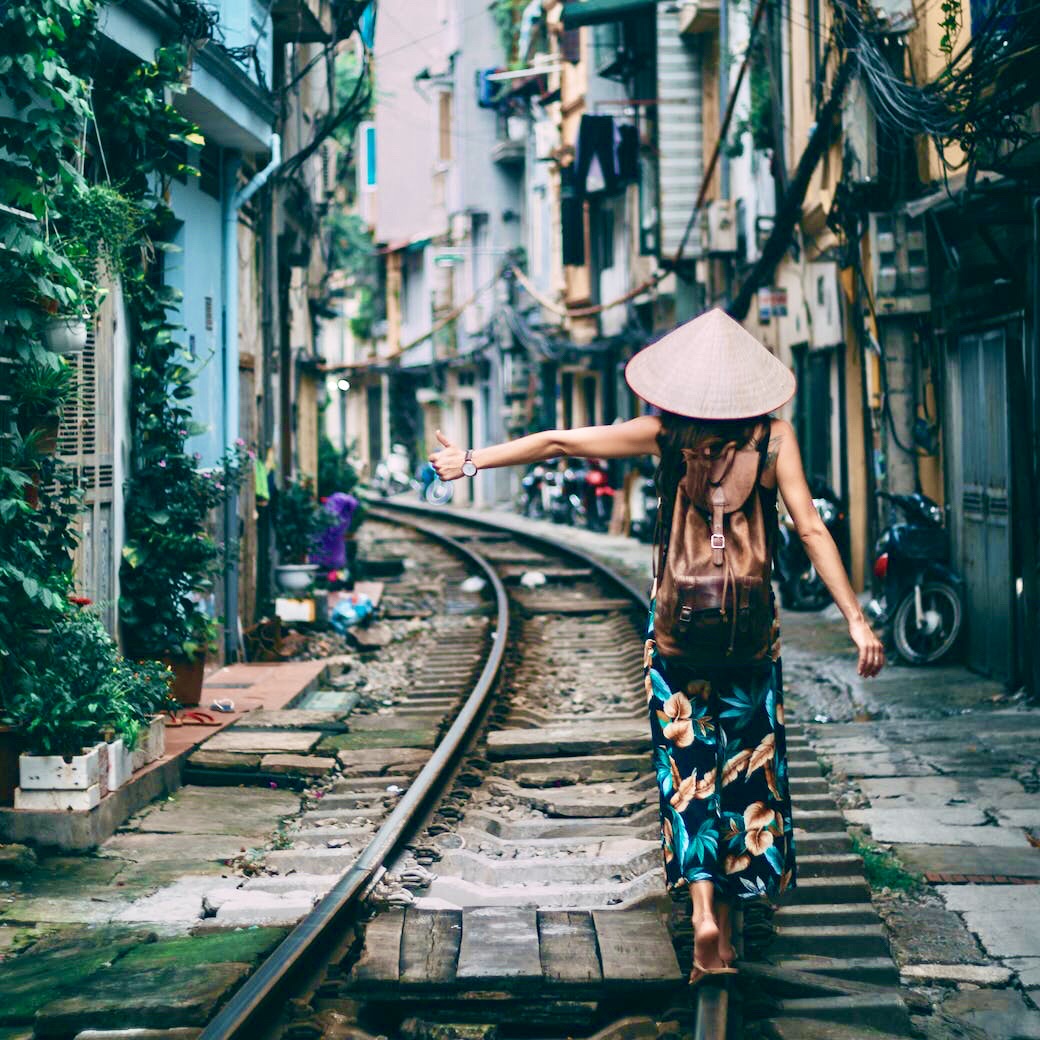
“Rising Dragon”
Why Vietnam is Unlike Anywhere Else on Earth
Vietnam moves at a pace that hits you immediately. Nearly 60 million motorbikes flow through city streets in a system that looks chaotic from the outside and functions perfectly from within. Riders navigate intersections with no signals and no collisions, reading each other’s speed and trajectory through some collective instinct that takes visitors days to trust enough to cross the road. Once you cross, you are in it — and Vietnam opens up fast.
The country runs 1,650 kilometres from north to south in an S-curve along the South China Sea. The north holds Hanoi, the Red River Delta, the terraced rice fields of Sapa at 1,600 metres elevation, and the karst limestone formations of Halong Bay rising from the water like a flooded mountain range. The centre holds Hue — the old imperial capital — and Hoi An, the ancient trading port whose lantern-lit streets have remained largely unchanged for four centuries. The south holds Ho Chi Minh City, formerly Saigon, a city of 9 million that operates at a different register entirely — louder, faster, hotter, with a street food culture that runs 24 hours and a history that the War Remnants Museum documents without softening.
History
Vietnam spent most of the 20th century at war. French colonial rule ended in 1954 at Dien Bien Phu — one of the most decisive military defeats of the colonial era. The country then split at the 17th parallel and fought a civil conflict that drew in American forces from 1964 to 1975. The north won. Reunification came in 1976. By the late 1980s, the Doi Moi economic reforms opened Vietnam to foreign investment and market activity. The economy has grown sharply ever since. Vietnam now ranks as one of the fastest-growing economies in Southeast Asia and the second largest coffee exporter in the world, after Brazil.
Cuisine
The food runs on five flavours in balance: sweet, sour, salty, bitter, spicy. Every dish aims for that balance rather than leaning into any single element. Pho — beef or chicken noodle soup simmered for hours with star anise, cinnamon, and charred ginger — started in northern Vietnam in the early 20th century and became the national dish. Banh Mi arrived with French colonisation and became something better: a baguette filled with pâté, pickled daikon, coriander, sliced chilli, and pork or tofu. The Hanoi egg coffee — cà phê trứng — uses whipped egg yolk and condensed milk over strong Vietnamese drip coffee to produce something between a beverage and a dessert. The Vietnamese Phin filter drip demands patience — a slow pour, a few minutes watching the world go by while it brews. None of these things exist anywhere else in exactly the same form.
Episode
Spring Rolls to Hands of God: Vietnam
The Vietnam episode of the NAO Podcast is titled Spring Rolls to Hands of God and covers the country through food, music, and cultural history. The episode moves between Hanoi street food and the deeper question of what Vietnamese identity looks like after a century of foreign occupation, war, and rapid economic change.
Water puppetry appears as one of those details that captures something essential about the country. The art form originated in the Red River Delta around a thousand years ago — performers stand waist-deep in water and control wooden puppets via rods beneath the surface, staging scenes from farming life, folk tales, and mythology. The tradition survived every political shift and continues today for the same reason it started: because it works.
The 1970s music thread runs through the episode as well. Vietnamese popular music of that era reflects the cultural split between north and south — government-approved patriotic songs in the north, a more American-influenced sound in the south that disappeared after 1975 and only re-emerged decades later. Together, the food and the music give the episode its particular texture.
Interview
Holland to Hanoi: A Teacher’s Adventure
Myrthe Duursma is a Dutch English teacher who spent four months at a university in Thai Nguyen, a city 80 kilometres north of Hanoi. Her episode covers what it actually looks like to live inside a culture rather than pass through it.
She navigated the contrast between communist North Vietnam — politically cautious, more reserved — and the southern character she encountered travelling further down the country. Myrthe took a boat through the caves of Halong Bay. Attended a village-wide wedding that ran for days. She dealt with apartment rats using duct tape and poison apples, which she describes without drama as simply part of the situation. She explored Hanoi’s Old Quarter and the Forbidden City of Hue.
What stayed with her most was the relationship with her students. Vietnamese students, she found, were deeply engaged and treated the opportunity with a seriousness that shifted how she thought about teaching altogether. She left Vietnam having decided it was a vocation rather than a job. She has since taught in India as well. Her full story is on her interview page.
Cuisine
Recipe
Vietnamese Style Spring-Rolls
Spring rolls trace back to ancient Chinese spring pancakes — thin wheat wrappers eaten at the start of spring. Vietnamese cooks replaced wheat with rice paper, which changed the character of the roll entirely: lighter, more transparent, built for fresh herbs and cold fillings rather than heat. Two versions emerged. Chả Giò — the fried roll — appeared in imperial court cuisine and spread outward from there. Gỏi Cuốn — the fresh roll — is attributed to the soldiers of King Nguyễn Huệ, who needed portable, nutritious food on the march and wrapped rice paper around whatever was available. Both remain central to Vietnamese cooking today. The fresh roll — rice paper, vermicelli, shrimp, lettuce, mint, coriander, dipped in hoisin or peanut sauce — represents Vietnamese flavour logic in a single bite: fresh, balanced, assembled rather than cooked, finished with herbs.
Cobra Medicine Wine
Chris received a souvenir from Vietnam: a bottle of fortified rice wine containing two preserved cobras. Snake wine — rượu rắn — has circulated in Vietnamese traditional medicine for centuries. Practitioners believe the snake’s properties transfer into the wine and treat conditions including back pain, rheumatism, and fatigue. The snakes steep submerged for months. The result sits on Chris’s kitchen counter. Whether he actually drinks it remains, as of this episode, an open question.
For more on Asia — covered in full on NAO.
Related
Hotels.com: Save up to 25% on mobile exclusive offers!


Spontaneous Trips: Seek the sun