
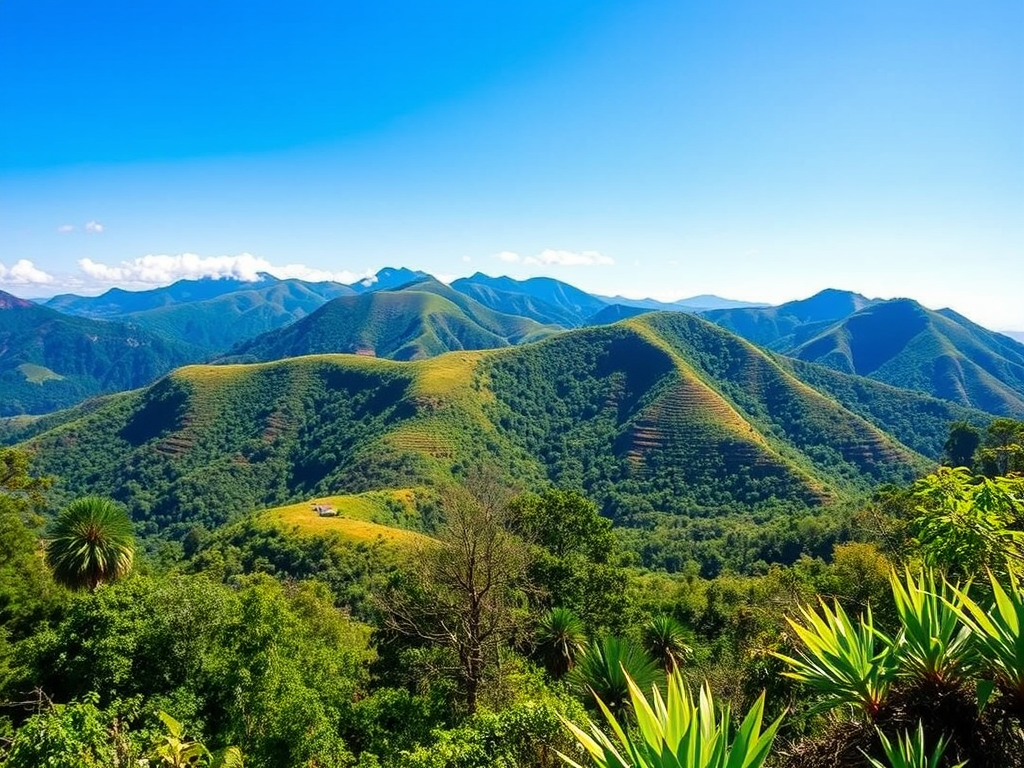
Land of Volcanoes
Central America’s Rising Star
El Salvador is the smallest country in Central America and one of the most misunderstood in the world. The name means The Saviour. The nickname is the Land of Volcanoes. Both are accurate. Over 100 volcanoes define the landscape.
The population is approximately 6 million. The capital is San Salvador. In 2021, El Salvador became the first country in the world to adopt bitcoin as legal tender. A decision that generated global headlines, economic debate. Whether the experiment succeeded depends on who you ask.
Interview
Daysi Amaya-Maragoni
This page exists because of Daysi Maragoni — born in El Salvador, raised in Canada, and one of the NAO podcast‘s core voices. Her account of growing up here — the earthquakes, the music, the food, the civil war that forced her family to leave — runs through everything on this page.
The Volcanoes
The volcanic landscape is not background scenery. It is the defining physical fact of El Salvador. The country sits on the Pacific Ring of Fire, the instability produce the volcanoes and earthquakes. Salvadorans live with the way coastal people live with the tide. It is simply part of the landscape..
Santa Ana Volcano — Ilamatepec — is the highest point in the country at 2,381 metres. It is hikeable and the crater lake at the summit is one of the more extraordinary sights in Central America. Volcán de Izalco earned the name Lighthouse of the Pacific from sailors who used its near-constant eruptions as a navigation point for centuries. The volcanic soil produces exceptional coffee — El Salvador’s coffee is among the finest in Latin America, grown at altitude in conditions the volcanoes created.
The national flag incorporates the volcanic landscape directly — five volcanoes between two oceans, representing the five Central American nations of the original federal republic. El Salvador is the only country in Central America with Pacific coastline exclusively. No Caribbean coast. The Pacific defines the beaches, the fishing culture, and the surfing scene that has built a quiet international reputation along the coast near La Libertad.
Episode
The Mayans
El Salvador’s pre-Columbian history runs deep. The Mayans were present here as early as 1200 BC. Their civilisation peaked between AD 400 and 900 — a period of extraordinary achievement in mathematics, astronomy, and agriculture that left physical evidence across the country.
The Mayan contribution to mathematics is specific and significant. They developed the concept of zero independently. Their counting system and their astronomical calendars were tools of genuine precision. The ball game played in ritual stadiums across the Mayan world blended elements of football, volleyball, and basketball — played with heavy rubber balls in stone courts whose dimensions encoded cosmological principles. The exact rules have been lost. The courts remain.
Joya de Cerén — a UNESCO World Heritage Site — is El Salvador’s answer to Pompeii. A Mayan village preserved by volcanic ash from a sudden eruption around AD 600. The ash sealed the buildings, the tools, the food stores, and the gardens exactly as they were in the moment of abandonment. It is the most complete picture of ordinary Mayan village life that exists anywhere.
Cuisine
Salvadoran food is built around corn, beans, and the pupusa — a thick corn tortilla stuffed with cheese, beans, chicharrón, or loroco, cooked on a griddle and served with curtido, a lightly fermented cabbage slaw, and tomato sauce. The pupusa is the national dish. It has been the national dish for over two thousand years. The Pipil people were making them before the Spanish arrived. They are still the most consumed food in the country.
Seafood cocktails made from fresh shellfish are a coastal staple — raw, dressed with lime, served cold in the heat. More adventurous options include iguana and snake, both present in the traditional food culture and both genuinely part of the culinary heritage rather than novelty items for tourists. Banana-leaf tamales differ from their Mexican equivalents in texture and filling — denser, earthier, specific to the region.
How to make Cow Tongue
Chef Francesco demonstrated cow tongue — Lengua de Res — for the El Salvador episode. Boiled for four hours, pan-fried, served with rice, carrots, celery, coriander, and a rich sauce. In El Salvador it is typically made as Lengua Entomatada — stewed in tomato sauce — or Lengua en Salsa. The slow-simmering process is essential. The tongue needs time to become tender. The result is a dish that rewards patience and reflects a food culture that has always known how to use everything well.
Hotels.com: Save up to 25% on mobile exclusive offers!


Bitcoin
In September 2021, El Salvador became the first country in the world to adopt bitcoin as legal tender alongside the US dollar. President Nayib Bukele framed it as financial inclusion — a way to bring banking services to the 70% of Salvadorans without bank accounts, and to reduce the cost of remittances from the diaspora in the United States. The cryptocurrency experiment generated significant attention.
In practice, adoption has been uneven. The Chivo wallet — the government’s bitcoin app — was used by a significant portion of the population. The bitcoin city project announced in 2021 has moved slowly. What the decision demonstrated, regardless of outcome, is that El Salvador under Bukele was willing to take risks that no other government was prepared to take. That willingness — for better or worse — defines the current chapter of the country’s story.
For more on Latin America — covered in full on NAO.
Related


Spontaneous Trips: Action-packed hotels