
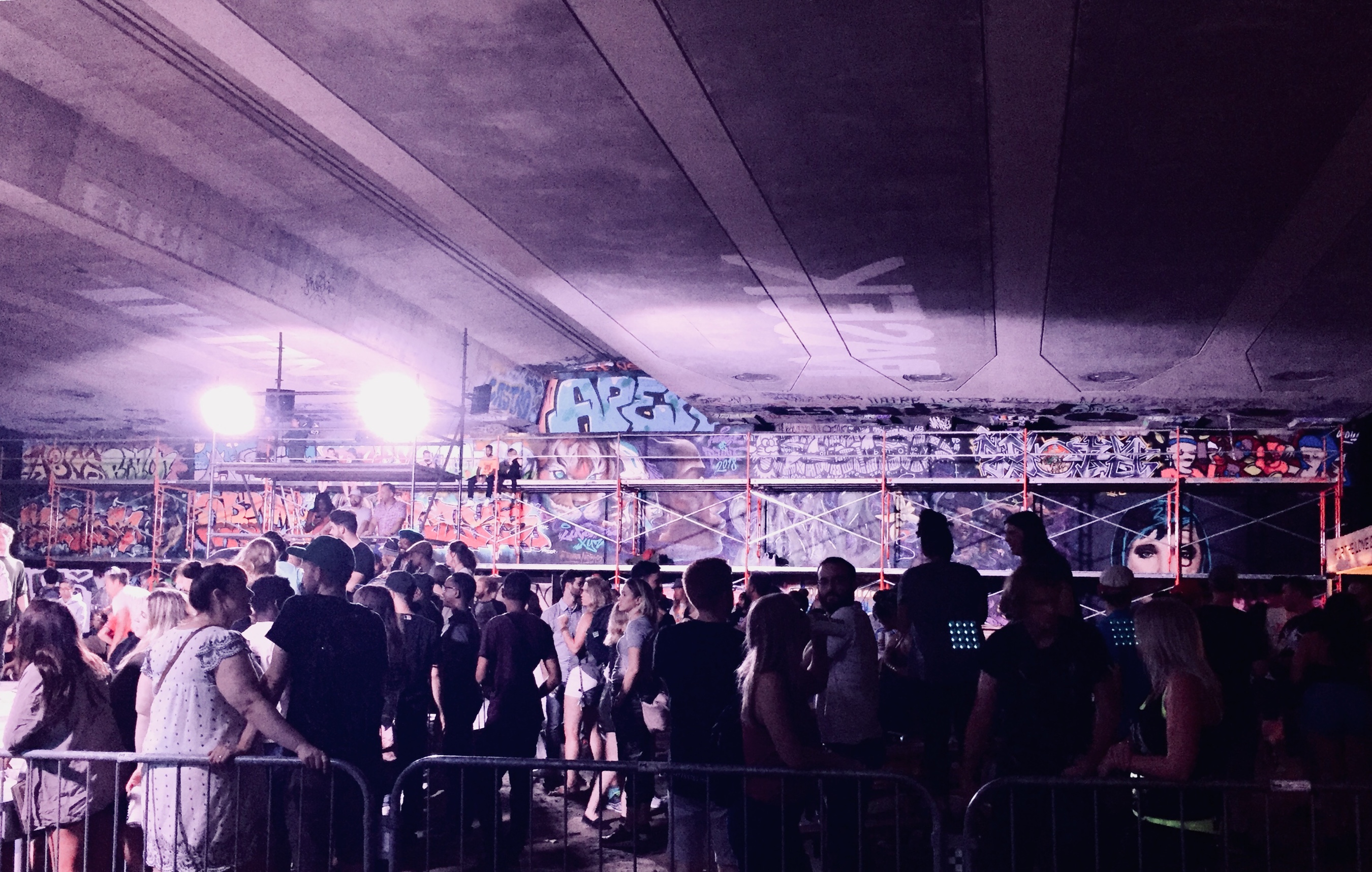
Urban Art Festival
Interview
Name: Tom Radford – Occupation: Project Manager Location: Ottawa
The House of PainT in Ottawa started under a bridge. A gathering spot beneath the Carleton University bridge where artists and b-boys would paint, hang out, and jam. No permission. No structure. Just a wall the city hadn’t decided to care about yet.
That changed when a coalition of artists and activists lobbied the city for legal status. They got it. The wall under the bridge became Canada’s first legally recognized graffiti wall—a designation that changed what was possible for the scene and for the festival that grew from it.
The House of PainT festival emerged directly from that foundation. It now runs annually as one of the largest urban art events in Canada, with city support and programming built around the four core disciplines of hip-hop—DJs, MCs, breakdancing, and graffiti. The graffiti wall remains the centrepiece. The festival never lost the connection to the underground culture that produced it. It grew without changing what it was.
What Sets It Apart
Tom Radford is direct about what makes House of PainT different from other urban art festivals. It’s curated by practitioners, not organizers. The people who run it are inside the culture. It’s designed for artists first—not for mainstream audiences or commercial sponsors.
That orientation shows in the programming. The graffiti jams aren’t demonstrations. They are the event. Writers come to paint, not to perform painting for an audience that doesn’t know the difference.
Ottawa’s Scene
Ottawa’s scene has always carried a confidence problem relative to its size and output. The quality of work produced here rivals Montreal and New York. The city sits within driving distance of both—which means Ottawa writers move. They paint in Toronto, in Montreal, across the country.
They embed themselves in other scenes and bring that back. Tom Radford describes it as a nomadic practice—artists follow the walls wherever the walls are. House of PainT is where they come back to.
The Bridge Wall
The original wall under the Carleton University bridge is still active. It still gets painted. The legal status that came from the original lobbying effort has held. Writers can work there without the pressure of unsanctioned graffiti. It functions as a permanent free wall in a country that has very few of them.
The significance is practical as much as symbolic. A free wall in a city centre gives writers space to develop work at scale without the risk that defines most street art.
Hip-Hop Unity
The four hip-hop disciplines that structure the festival reflect the original culture the bridge wall came from. DJs, b-boys, MCs, and writers all developed together inside the same underground ecosystem in the late 1970s and 1980s.
A festival that treats them as a unified practice rather than separate entertainment categories is making a specific argument about what hip-hop is and where it came from. House of PainT has made that argument every year since it started.
The city of Ottawa funds it. The artists run it. That combination is rarer than it sounds.
Watch the feature story above or on Youtube.
Website
House of PainT — Urban Art Festival
Story & Images by André Quesnel
Related
Street Art Documentary — Following the street art scene across Ottawa, New York, Amsterdam, and the Netherlands
In-Depth Ottawa — Complete Ottawa travel guide
In-Depth Canada — Canadian travel coverage

