
The Land of the Brave
Scotland stakes out 78,000 square kilometers across the northern third of Great Britain. It holds around 5.5 million people and over 790 islands—though only about 130 of them actually support permanent life. The country borders England to the south, while the Atlantic crashes against the west and the North Sea bites at the east. The Highlands dominate the northern half; they are sparse, dramatic, and remain one of the least densely populated regions in all of Europe. Below that, the Central Belt runs between Edinburgh and Glasgow, housing the vast majority of the population and the bulk of the economic engine.
Scotland operates on its own terms, running its own parliament, legal system, and education system. All three look and feel different from the rest of the UK. The Scottish Parliament finally reopened in 1999 after a 292-year blackout following the Acts of Union in 1707. Because of this long gap, the question of full independence never truly sleeps. A 2014 referendum saw 55% vote to stay in the UK, yet the debate has refused to close ever since.
History here is often marked by the Highland Clearances of the 18th and 19th centuries. Landlords evicted tens of thousands of people to make room for sheep farming. As a result, a massive wave of Scots emigrated to Canada, Australia, and New Zealand. These diaspora communities took their Gaelic language and folk traditions with them across the globe. Cape Breton in Nova Scotia stands as a perfect example, preserving Gaelic traditions that eventually faded in Scotland itself. Even now, the clearances remain a raw nerve in debates over land ownership and national identity.
Scotland’s intellectual footprint is massive compared to its size. The Scottish Enlightenment gave the world David Hume, Adam Smith, and James Watt. On top of that, Robert Burns, Walter Scott, and Arthur Conan Doyle all emerged from this same small population. That streak continues today through the work of Irvine Welsh, Ali Smith, and James Kelman.
Legends and Lore
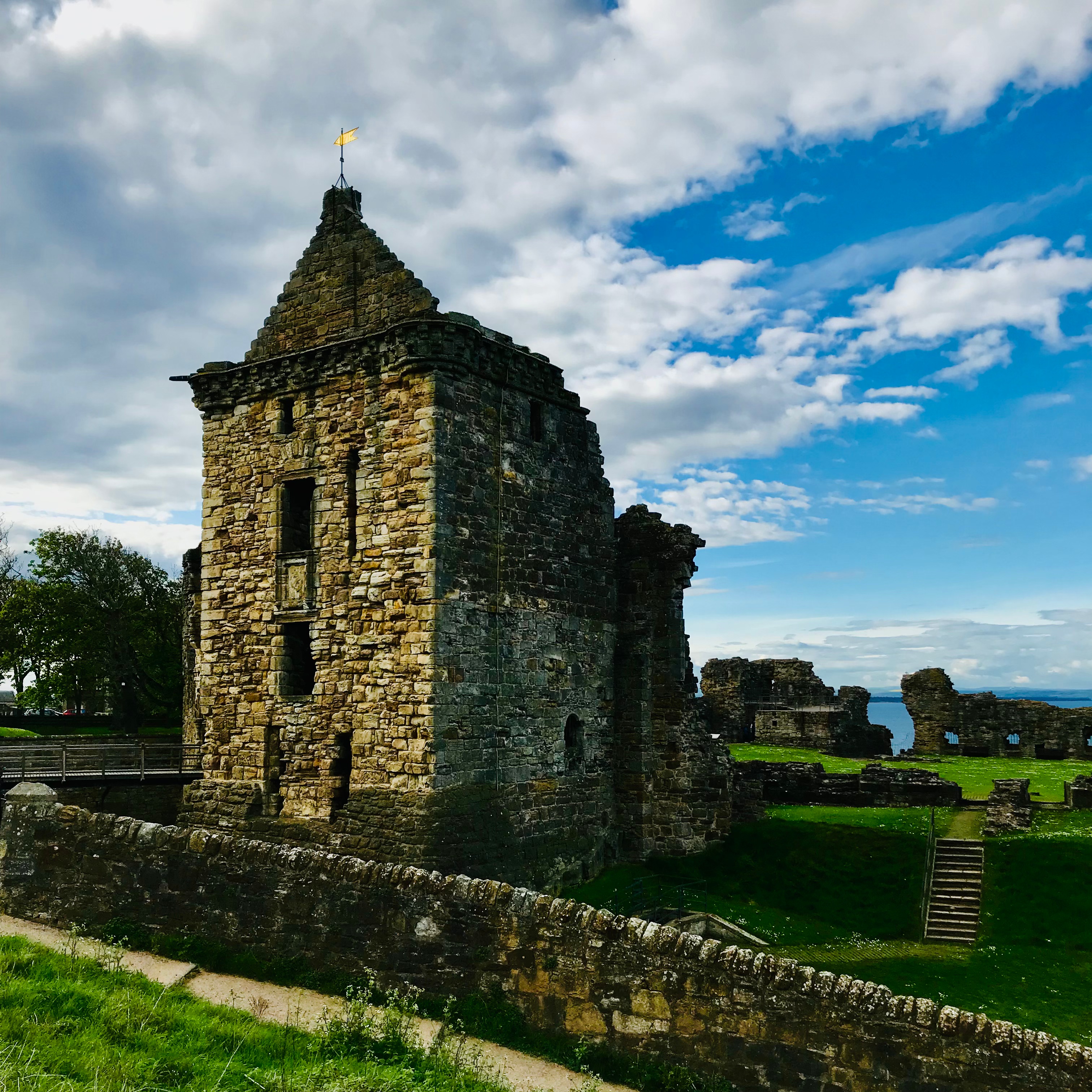
André spent eight days navigating this landscape. We drove on the left in an electric car, tackling roads that weren’t built with straight lines in mind. The route cut through Edinburgh, St Andrews, and the Fife countryside. Remarkably, the weather held for five or six consecutive sunny days—a stretch so rare that locals treated it like a miracle. The NAO episode digs into the history, the engineering, and what Scotland actually looks like when the clouds finally part.
Edinburgh
Edinburgh’s Old Town reaches back to the 12th century. The Grassmarket sits right below the castle; it began as a bustling marketplace before it became a site for public executions. These days, the same cobblestones host pubs and independent shops. From there, the Royal Mile connects Edinburgh Castle to the Palace of Holyroodhouse, compressing centuries of history into one walkable kilometer. Every August, the city transforms for the Fringe, the world’s largest arts festival, cramming over 3,000 shows into 300 venues across a city of half a million people.
Ten kilometers south of the city, Rosslyn Chapel has stood since 1446. It houses some of the most intricate stone carvings in the country. Many visitors arrive hunting for secrets about the Knights Templar or the Holy Grail, but the stonework rarely gives up easy answers. The chapel rewards those who pay close attention rather than those who arrive with a pre-set theory.
Falkirk Wheel
The Falkirk Wheel serves as a massive bridge between two canals at different heights. The Forth and Clyde Canal and the Union Canal sit 24 meters apart, and this rotating boat lift was engineered specifically to close the gap. It opened in 2002 as the only structure of its kind on the planet. The two gondolas perfectly counterbalance each other. Incredibly, the energy needed to rotate the entire massive frame is about the same as boiling eight kettles of water. It is a striking piece of modern muscle in an ancient landscape.
Falkland
Falkland is a small royal burgh in Fife centered around a 16th-century palace—once a hunting retreat for the Stuart monarchs. The surrounding hills offer long, green views over the countryside with no urban sprawl to break the horizon. It’s the kind of landscape that sticks in the memory far longer than any photograph could.
Whisky
Islay sits off the west coast, home to legendary distilleries like Laphroaig, Ardbeg, and Bowmore. They produce heavily peated malts using peat pulled directly from the island’s bogs—thousands of years of compressed earth. Essentially, the smoke in the glass is the taste of the landscape itself. Across the rest of the country, over 130 working distilleries operate across five distinct regions, each shaped by its own water, climate, and local secrets.
Music
Every January, Glasgow hosts Celtic Connections, a two-week explosion of folk and world music. The festival draws over 2,000 artists, making it one of the largest winter gatherings in Europe. The bagpipe tradition here goes much deeper than the postcards suggest. Piping colleges and competitive circuits have maintained a living, breathing performance culture for centuries, long before the Highland Games became a global image.
Fish and chips near St Andrews. Served in paper. No pickle, no mustard. Worth the stop.


