
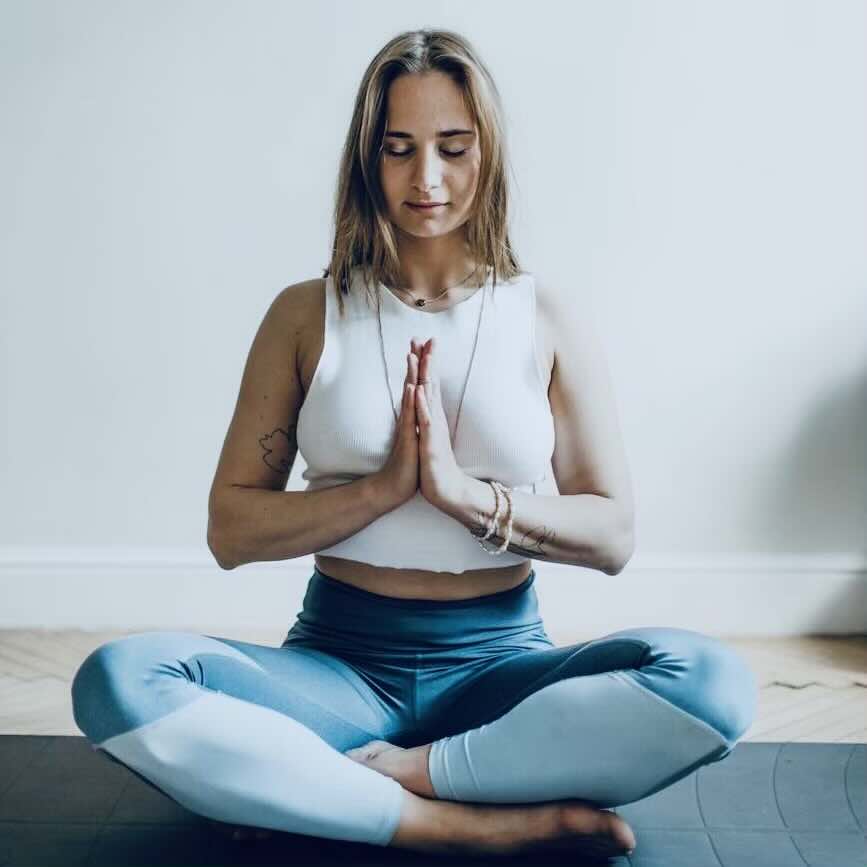
Mind, Body, and Spirit
The Health File documents the people, places, and practices that shape how we live physically and mentally. It covers interviews with people who have rebuilt their health after significant setbacks, destinations that support recovery and rest, and ancient practices that sit outside the mainstream medical conversation. It runs across multiple formats — podcast episodes, travel guides, and direct interviews — all connected by the same question: what does it actually take to stay well?
Inspiring Healing Stories
Two NAO interviews sit at the centre of the Health File — Marc Cinanni and Kristina Allen. Both faced serious health interruptions. Both found specific, practical ways through. Their stories are different in almost every detail. The underlying logic is the same — the body responds to attention, consistency, and the right environment.
Marc Cinanni
Author, Musician, Entrepreneur
Marc Cinanni spent seven years coordinating global infrastructure contracts at the United Nations in Geneva. Burnout came gradually and then completely. Health issues accelerated his resignation.
Canada came next. He spent a month at an ashram in the West Indies — meditation, yoga, and body awareness as a daily practice rather than a supplement to a busy schedule. The body is a spacesuit, he says — the single vehicle you have for the duration, worth treating accordingly.
With his partner Esther Pallejà, he formed the band Mantranima and moved to Hornby Island, British Columbia — 900 residents, sea lions, rainwater harvesting, and an album called Trees and Shadows. They now run Muntanya Màgica — a forest retreat in the Penedès wine region of Spain built around wellness, writing residencies, and creative work. Illness redirected his life. He followed where it pointed.
Kristina Allen
Healing with Diet and Exercise
Kristina Allen manages golf operations in Canada and works part-time as a personal trainer. She lost 156 pounds ahead of her son’s wedding and maintained that loss. Then a sudden autoimmune condition caused paralysis from the knees down. She faced a direct choice — stop or rebuild. She chose to rebuild. Four years of strength training followed, with a focus on powerlifting and Olympic lifts. She now runs community boxing and mobility classes, pursues personal bests, and uses scuba diving as active recovery. Her account is specific and practical — a record of what the body can do when the decision to rebuild is made and held.
Liquid Gold: The Pharmacy in the Hive
Honeybees have held this planet together for 100 million years. Without them, the agricultural engine stops dead. The industrial machine treats them like disposable parts. Strip the hive bare. Pump them full of sugar water. Maximize the yield. Willow refuses the game. No land. No bankroll. Just the boxes, the dirt, and a stubborn respect for the colony. She pulls from 19th-century wisdom, leaving enough honey for the bees to survive the winter on their own terms. From the chemical warfare of urban gardens to the daily fight for native pollinators, this is the grit required to keep the hive alive. The real work. No shortcuts. Inside the Hive: Beekeeper Willow
Qi Gong
Qi Gong is an ancient Chinese practice rooted in Traditional Chinese Medicine. It works with breath, movement, and sustained attention to build and direct internal energy. The NAO Asia episode covers a specific case — a healer in Java known on film as Dynamo Jack, who spent decades in daily meditation practice and developed the ability to direct energy through his hands. Patients described heat, tingling, and relief. He lit LED bulbs with his fingers on camera — no apparatus, no tricks. He avoided publicity by choice, protecting a practice he understood most people were not ready to engage with directly. What he demonstrated on film stands as a record of what focused human energy, properly developed, can produce.
Special Places
Two destinations feature in the Health File for what they demonstrate about the relationship between environment and wellbeing.
The Netherlands introduced the four-day working week during the 1990s recession as a cost-cutting measure. Output held steady. Morale improved. Burnout dropped. The model spread across tech, education, and public sectors. By law, every Dutch worker receives a minimum of four weeks annual holiday. The Netherlands consistently ranks among the highest in the world for work-life balance and national happiness. The Dutch Work Life episode covers the model in full.
COSTA RICA – Top of Happiness Index
Costa Rica abolished its military in 1948 and redirected the defence budget into education and universal healthcare. The country generates almost all of its electricity from renewable sources and protects 25% of its land. It consistently ranks among the happiest countries in the world despite not being among the wealthiest. The road trip episode covers the route from the Central Valley to the Pacific coast — volcanoes, cloud forests, and a country that built its social infrastructure around people rather than defence.